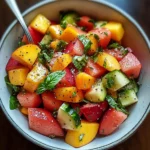
Ingredients
Scale
- 4 cups cubed watermelon: The star of the show, watermelon provides the refreshing, hydrating base for this salad. Opt for a seedless variety for ease of preparation and eating. Look for a watermelon that feels heavy for its size and has a deep, resonant sound when you thump it – these are indicators of ripeness and juiciness. If you’re using a seeded watermelon, simply remove the seeds as you cube it. The sweetness and high water content of watermelon make it the perfect counterpoint to the richer, more intensely flavored peaches. Don’t be afraid to get creative with the cut – cubes are classic, but you could also use melon balls for a more elegant presentation, especially if you’re serving this salad at a summer gathering or barbecue.
- 3 ripe peaches, pitted and sliced: Peaches bring a delicate sweetness and a slightly floral aroma to the salad. Choose peaches that are ripe but still firm to the touch. Overripe peaches can become mushy and lose their shape in the salad. The fragrance of a ripe peach should be noticeable even before you cut into it. Freestone peaches are generally easier to pit and slice than clingstone varieties. Slice the peaches into wedges or segments that are roughly the same size as your watermelon cubes for visual harmony and ease of eating. If you prefer nectarines, they can be used as a delicious substitute, offering a similar flavor profile with a slightly smoother skin.
- ½ cup crumbled feta cheese: The salty, tangy feta cheese is the perfect counterpoint to the sweetness of the fruits. It adds a creamy texture and a savory element that elevates the salad beyond just a simple fruit mix. Look for a good quality feta cheese, preferably one that is brined in whey, as these tend to have a richer, more complex flavor. If you prefer a milder cheese, you can substitute with fresh mozzarella balls (bocconcini) or goat cheese crumbles. For a vegan option, consider using a plant-based feta alternative or simply omitting the cheese altogether – the salad is still delicious without it.
- ¼ cup fresh mint leaves, chopped: Fresh mint adds a burst of coolness and herbaceousness that complements both the watermelon and peaches beautifully. Mint is a classic summer herb, and its bright, refreshing flavor enhances the overall vibrancy of the salad. Use fresh mint leaves for the best flavor – dried mint is not a suitable substitute in this recipe. Gently wash and dry the mint leaves before chopping them finely. You can also tear the mint leaves by hand instead of chopping for a more rustic look. For a slightly different flavor profile, you could experiment with other fresh herbs like basil or lemon balm, although mint is traditionally the best choice for this salad.
- ¼ cup extra virgin olive oil: A good quality extra virgin olive oil forms the base of the simple dressing and adds richness and flavor to the salad. Choose an olive oil that is fruity and mild, rather than overly bitter or peppery, so that it doesn’t overpower the delicate flavors of the fruits. Extra virgin olive oil not only contributes to the taste but also provides healthy fats and antioxidants. If you prefer a lighter dressing, you can reduce the amount of olive oil slightly, but it is essential for bringing all the flavors together.
- 2 tablespoons fresh lime juice: Lime juice provides acidity and brightness to the dressing, balancing the sweetness of the fruits and the richness of the olive oil. Freshly squeezed lime juice is crucial for the best flavor – bottled lime juice often lacks the same vibrancy and zest. The acidity of the lime juice also helps to prevent the peaches from browning and keeps the salad looking fresh and appealing. If you don’t have limes on hand, you can substitute with lemon juice, although lime juice tends to complement the flavors of watermelon and peach particularly well.
- 1 tablespoon honey or maple syrup (optional): A touch of honey or maple syrup can enhance the sweetness of the salad and balance the acidity of the lime juice, especially if your peaches are not overly ripe. This is optional and depends on your personal preference and the sweetness of your fruit. If your peaches and watermelon are already very sweet, you may not need any additional sweetener. Honey adds a floral sweetness, while maple syrup provides a slightly richer, caramel-like note. For a vegan option, ensure you use maple syrup or another plant-based sweetener like agave nectar.
- Salt and freshly ground black pepper to taste: Salt and pepper are essential seasonings that enhance all the other flavors in the salad. A pinch of salt helps to bring out the sweetness of the fruits and balance the acidity of the lime juice. Freshly ground black pepper adds a subtle warmth and complexity. Season the salad to taste, starting with a small amount and adding more as needed. Be mindful of the saltiness of the feta cheese when seasoning, as it already contributes saltiness to the dish.
Instructions
- Prepare the Watermelon and Peaches: Begin by preparing your fruits. Wash the watermelon thoroughly and cut it into bite-sized cubes, approximately ½ to 1 inch in size. If you are using a seeded watermelon, make sure to remove all the seeds as you cube it. Set the cubed watermelon aside in a large bowl. Next, wash the peaches and gently pat them dry. Cut the peaches in half, remove the pits, and slice them into wedges or segments that are similar in size to the watermelon cubes. Add the sliced peaches to the bowl with the watermelon. Ensuring that both fruits are cut into similar sizes not only looks visually appealing but also ensures a more consistent texture and flavor distribution in each bite.
- Prepare the Mint: Rinse the fresh mint leaves under cold water and gently pat them dry with a paper towel or clean kitchen towel. This removes any dirt or grit and helps to prevent the mint from bruising. Finely chop the mint leaves using a sharp knife. Alternatively, you can tear the mint leaves by hand for a more rustic look and to release their aromatic oils. Set the chopped mint aside for later. Fresh mint is best used immediately after chopping to retain its vibrant flavor and color.
- Make the Dressing: In a small bowl or jar, whisk together the extra virgin olive oil, fresh lime juice, and honey or maple syrup (if using). Whisk vigorously until the dressing is well emulsified and slightly thickened. Emulsifying the dressing ensures that the oil and lime juice are properly combined, creating a smooth and cohesive dressing that coats the salad ingredients evenly. Taste the dressing and adjust the sweetness and acidity to your liking. You can add a little more lime juice for extra tanginess or a touch more honey for sweetness.
- Assemble the Salad: Pour the prepared dressing over the watermelon and peaches in the large bowl. Gently toss the fruits with the dressing to ensure they are evenly coated. Be careful not to overmix, as this can bruise the delicate fruits. Next, add the crumbled feta cheese and chopped fresh mint to the salad. Again, gently toss everything together to combine, being mindful not to break up the feta cheese too much. The feta should be distributed throughout the salad but still retain some of its crumbles for textural contrast.
- Season and Serve: Season the salad with salt and freshly ground black pepper to taste. Start with a small pinch of salt and a few grinds of pepper, and then taste and adjust as needed. Remember that feta cheese is already salty, so you may not need to add much additional salt. Give the salad one final gentle toss to distribute the seasonings. The Peach Watermelon Salad is best served immediately to enjoy the freshness and crispness of the fruits. If you are not serving it right away, you can chill it in the refrigerator for up to an hour, but be aware that the watermelon may release some of its juices over time, making the salad slightly watery. For optimal flavor and texture, it’s recommended to serve the salad as soon as possible after assembling.
Nutrition
- Serving Size: one normal portion
- Calories: 180-220
- Sugar: 12-15 grams
- Sodium: 200-250 mg
- Fat: 12-15 grams
- Saturated Fat: 4-5 grams
- Carbohydrates: 15-20 grams
- Fiber: 2-3 grams
- Protein: 4-5 grams
- Cholesterol: 15-20 mg