Ingredients
Scale
- 1.5 lbs Carrots: Choose carrots that are firm and brightly colored. You can use regular carrots or opt for rainbow carrots for a more visually appealing dish. For this recipe, we will peel and cut them into 1-inch thick rounds. If using very thick carrots, you may want to halve or quarter them lengthwise before slicing into rounds to ensure even cooking.
- 1.5 lbs Parsnips: Select parsnips that are firm and feel heavy for their size. Smaller to medium-sized parsnips tend to be sweeter and less woody. We will peel them and cut them into 1-inch thick rounds, similar in size to the carrots, for uniform cooking. If your parsnips are particularly thick at the top end, you can halve or quarter them lengthwise to match the thickness of the carrot pieces.
- 2 tablespoons Olive Oil: Extra virgin olive oil is preferred for its flavor and health benefits, but you can also use other neutral cooking oils like avocado oil or grapeseed oil. The olive oil is crucial for roasting the vegetables and adding a touch of richness.
- 1 large Orange: You’ll need both the zest and the juice of a large, juicy orange. Opt for navel oranges or Valencia oranges for their sweetness and vibrant flavor. Make sure to zest the orange before juicing it.
- 1/2 cup Fresh Orange Juice: This is in addition to the juice from the orange you zested. If your orange doesn’t yield enough juice, supplement with store-bought fresh orange juice (not from concentrate). Freshly squeezed juice makes a significant difference in flavor.
- 1/4 cup Vegetable Broth (or Chicken Broth): Low-sodium vegetable broth is ideal for keeping the dish vegetarian and allowing the orange flavor to shine. Chicken broth can also be used for a slightly richer flavor profile if you prefer. The broth helps to create the braising liquid and keeps the vegetables moist during cooking.
- 2 tablespoons Honey (or Maple Syrup): A touch of sweetness enhances the natural sugars in the carrots and parsnips and balances the acidity of the orange. Honey or maple syrup both work beautifully. For a vegan option, ensure you use maple syrup. Adjust the amount to your preference depending on how sweet you like your vegetables.
- 1 tablespoon Fresh Thyme Leaves: Fresh thyme adds a lovely herbaceous note that complements the orange and root vegetables. If you don’t have fresh thyme, you can substitute with 1 teaspoon of dried thyme, but fresh is highly recommended for its brighter flavor.
- 1 teaspoon Ground Ginger: Ground ginger adds a warm, subtly spicy element that pairs wonderfully with orange and root vegetables. If you prefer fresh ginger, you can use about 1 tablespoon of grated fresh ginger instead.
- 1/2 teaspoon Salt: Sea salt or kosher salt is preferred. Salt enhances the flavors of all the ingredients and is crucial for seasoning the vegetables properly.
- 1/4 teaspoon Black Pepper: Freshly ground black pepper is recommended for the best flavor. Pepper adds a subtle warmth and complexity to the dish.
- Optional Garnishes: Fresh parsley, chopped toasted pecans or walnuts, orange zest for extra brightness. These are optional but can elevate the presentation and flavor of the dish.
Instructions
- Preheat Oven and Prepare Vegetables: Preheat your oven to 400°F (200°C). This temperature is ideal for roasting and braising the vegetables, ensuring they become tender and slightly caramelized. While the oven is preheating, prepare your carrots and parsnips. Wash and peel both the carrots and parsnips thoroughly. Using a sharp knife, cut them into 1-inch thick rounds. Try to cut them into roughly uniform sizes so they cook evenly. If the parsnips are very thick at the top, you may need to halve or quarter them lengthwise before slicing into rounds to ensure consistent thickness and cooking time.
- Zest and Juice the Orange: Wash your orange thoroughly. Using a microplane or fine grater, zest the orange, being careful to only grate the brightly colored outer layer and avoid the bitter white pith underneath. You’ll need about 1 tablespoon of orange zest. Set the zest aside. Next, cut the orange in half and juice it using a citrus juicer or by hand. You’ll need about 1/4 cup of fresh orange juice from this orange, plus an additional 1/2 cup of fresh orange juice as listed in the ingredients.
- Combine Ingredients in a Baking Dish: In a large bowl, toss the prepared carrots and parsnips with the olive oil, salt, and black pepper. Ensure that the vegetables are evenly coated with the oil and seasonings. This step is important for flavor development and even roasting. Transfer the seasoned vegetables to a large baking dish or roasting pan. A 9×13 inch baking dish works well. Spread the vegetables in a single layer as much as possible to promote even cooking.
- Prepare the Braising Liquid: In a separate small bowl, whisk together the fresh orange juice (both the 1/4 cup from the zested orange and the additional 1/2 cup), vegetable broth (or chicken broth), honey (or maple syrup), orange zest, fresh thyme leaves, and ground ginger. Whisk until the honey or maple syrup is fully dissolved and all ingredients are well combined. This flavorful braising liquid is what will infuse the vegetables with their signature orange-ginger-thyme flavor.
- Pour Braising Liquid over Vegetables: Pour the prepared braising liquid evenly over the carrots and parsnips in the baking dish. The liquid should come about halfway up the sides of the vegetables. If it doesn’t quite reach halfway, you can add a little more broth or orange juice to bring it to the right level. The liquid is essential for braising, keeping the vegetables moist and tender as they cook.
- Braise in the Oven: Cover the baking dish tightly with aluminum foil. This creates a steamy environment inside the dish, which is crucial for braising. Place the covered baking dish in the preheated oven and bake for 45 minutes. After 45 minutes, remove the foil and continue to bake for another 20-30 minutes, or until the carrots and parsnips are tender when pierced with a fork and the braising liquid has reduced and slightly thickened into a glaze. The uncovered baking allows the vegetables to caramelize slightly and the sauce to concentrate in flavor.
- Check for Tenderness and Glaze: To check for doneness, pierce a carrot and a parsnip with a fork. They should be easily pierced and tender throughout. The braising liquid should have reduced and thickened to a slightly syrupy glaze coating the vegetables. If the liquid is still very thin, you can bake for a few more minutes uncovered to allow it to reduce further. Be careful not to overcook the vegetables, as they can become mushy.
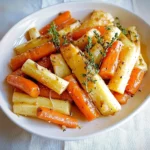
- Serve Hot: Once the carrots and parsnips are tender and beautifully glazed, remove the baking dish from the oven. Let it rest for a few minutes before serving. This allows the flavors to meld together even further. Garnish with fresh parsley, chopped toasted pecans or walnuts, or extra orange zest, if desired, for added visual appeal and flavor. Serve the Orange-Braised Carrots and Parsnips hot as a delicious and healthy side dish.
Nutrition
- Serving Size: one normal portion
- Calories: 180-220
- Sugar: 12-15 grams
- Sodium: 200-250 mg
- Fat: 8-10 grams
- Saturated Fat: 1-2 grams
- Carbohydrates: 25-30 grams
- Fiber: 6-8 grams
- Protein: 2-3 grams
- Cholesterol: 0 mg