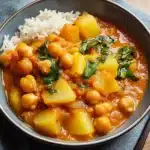
Ingredients
Scale
- Oil: 2 tablespoons neutral cooking oil (like vegetable, canola, sunflower, or coconut oil)
- Aromatics:
- 1 large yellow onion, finely chopped (about 1.5 cups)
- 3–4 cloves garlic, minced (about 1 tablespoon)
- 1-inch piece fresh ginger, peeled and grated (about 1 tablespoon)
- 1 green chili (like serrano or jalapeño), finely chopped (optional, adjust to your heat preference; remove seeds for less heat)
- Spices (The Heart of the Curry):
- 1.5 teaspoons ground cumin
- 1.5 teaspoons ground coriander
- 1 teaspoon turmeric powder
- 1/2 teaspoon garam masala (add more towards the end for finishing, if desired)
- 1/4 to 1/2 teaspoon cayenne pepper or red chili powder (adjust to taste)
- 1/2 teaspoon smoked paprika (optional, adds a subtle smoky depth)
- 1 teaspoon salt (or to taste)
- 1/4 teaspoon black pepper, freshly ground
- Main Components:
- 2 medium-large potatoes (about 400-500g), peeled and diced into 3/4-inch cubes (Yukon Gold or Russets work well)
- 1 can (15-ounce / 400g) chickpeas (garbanzo beans), rinsed and drained (or about 1.5 cups cooked chickpeas)
- 1 can (14.5-ounce / 400g) diced tomatoes, undrained (fire-roasted adds extra flavor)
- Liquid & Creaminess:
- 1 can (13.5-ounce / 400ml) full-fat coconut milk (shake well before opening) OR 1.5 cups vegetable broth for a lighter version (you may need slightly more broth/water if not using coconut milk)
- 1/2 cup water or vegetable broth, as needed to adjust consistency
- Finishing Touches:
- 1–2 tablespoons fresh lemon or lime juice
- Fresh cilantro (coriander leaves), chopped, for garnish (about 1/4 cup)
Instructions
- Prepare Your Ingredients (Mise en Place): Before you start cooking, ensure all your vegetables are chopped, spices measured, and cans opened. This makes the cooking process smooth and prevents rushing or burning ingredients. Chop the onion, mince the garlic, grate the ginger, and dice the potatoes. Rinse and drain the chickpeas. Have your spices ready in small bowls.
- Sauté the Aromatics: Heat the oil in a large pot, Dutch oven, or deep skillet over medium heat. Once the oil is shimmering slightly, add the chopped onion. Sauté for 5-7 minutes, stirring occasionally, until the onions become soft, translucent, and lightly golden at the edges.
- Add Ginger, Garlic, and Chili: Stir in the minced garlic, grated ginger, and optional chopped green chili. Cook for another 1-2 minutes, stirring constantly until fragrant. Be careful not to burn the garlic, which can turn bitter. The kitchen should start smelling amazing at this point!
- Bloom the Spices: Add the ground cumin, ground coriander, turmeric powder, cayenne pepper (or red chili powder), smoked paprika (if using), salt, and black pepper to the pot. Stir continuously for about 1 minute. Cooking the spices in oil (“blooming”) deepens their flavor and removes any raw taste. The mixture will become very fragrant and paste-like. If it seems too dry, you can add another splash of oil or a tablespoon of water.
- Incorporate Tomatoes: Pour in the can of undrained diced tomatoes. Stir well, scraping the bottom of the pot to lift any flavorful browned bits (deglazing). Bring the mixture to a gentle simmer and cook for 3-5 minutes, allowing the tomatoes to break down slightly and meld with the spices, creating the base sauce for the curry.
- Add Potatoes and Liquid: Add the diced potatoes to the pot. Stir to coat them well with the tomato-spice mixture. Now, pour in the full-fat coconut milk OR the vegetable broth. If using broth and aiming for a creamier (but lighter) finish, you can reserve some broth and add a slurry of cornstarch later, or stir in some plant-based yogurt/cream at the end. Add the additional 1/2 cup of water or broth if the mixture seems too thick, especially if not using coconut milk. You want enough liquid to cook the potatoes properly.
- Simmer Gently: Bring the curry back to a gentle simmer. Once simmering, reduce the heat to low, cover the pot, and let it cook for 15-20 minutes. Stir occasionally to prevent sticking. The goal here is to cook the potatoes until they are fork-tender but not falling apart. Check a piece of potato by piercing it with a fork; it should go through easily. Cooking time may vary slightly depending on the size of your potato cubes and the type of potato used.
- Introduce the Chickpeas: Once the potatoes are tender, stir in the rinsed and drained chickpeas. Add the garam masala now if you want a final burst of aromatic warmth (it’s often added at the end in Indian cooking). Stir everything gently to combine.
- Final Simmer & Adjust Consistency: Let the curry simmer uncovered for another 5-10 minutes. This allows the chickpeas to heat through and absorb the flavors of the sauce, and it also helps the sauce thicken slightly. If the curry is too thick for your liking, add a splash more water or vegetable broth. If it’s too thin, let it simmer uncovered for a few more minutes, or mash a few potato pieces against the side of the pot with a spoon to release their starch and thicken the sauce naturally.
- Finish and Serve: Turn off the heat. Stir in the fresh lemon or lime juice – this brightens up all the flavors significantly. Taste the curry and adjust seasoning if necessary; add more salt, pepper, or a pinch more cayenne if you like it spicier. Ladle the hot Chickpea and Potato Curry into bowls, garnish generously with fresh chopped cilantro, and serve immediately.
Nutrition
- Serving Size: One Normal Portion
- Calories: 350-450